


International Women’s Day, marked annually on 8th March, celebrates the social, economic, cultural, and political achievements of women, while also highlighting the need to accelerate progress towards gender equality (1).
For our March blog, we wanted to highlight women working across forestry and the wider environmental sector. “Green” careers continue to grow, reflecting the increasing importance of protecting and enhancing the natural environment (2). Forestry has traditionally been a male-dominated sector (3), but as it evolves, so too does the diversity of people working within it.
The sector benefits from a range of perspectives, bringing new ideas and strengthening how projects are delivered in practice - particularly in forestry and woodland creation, where both practical delivery and long-term thinking are essential.
To bring this to life, we spoke to women working across forestry and woodland carbon, each with their own route into the sector and perspective on the role they play today.
Hester Robertson, founder, CloudForest
CloudForest is a digital marketplace for timber and wood products, designed to connect people and businesses with locally sourced wood. It aims to address fragmentation in the UK timber supply chain by connecting buyers and sellers directly, helping the right timber find the right end use.
What is your current role, and what does a typical day look like?
Alongside my partner and a friend, I look after a small mixed woodland creation project, and I also run an online marketplace for standing trees and roadside logs.
I can’t say there’s a “typical” day, for the woodland I’ve most recently been planting trees to replace those that have died from the original planting. The project so far has involved detailed financial modelling, woodland design, and working with contractors.
The marketplace is equally varied - a lot of work has gone into designing how the platform should work, from interviews with various stakeholders working along the supply chain, to learning about user interface design, to getting out on site, measuring trees and logs.
How did you first get into forestry?
I didn’t initially plan to work in this field - in fact, I’m not sure I even knew at school that people specialised in forestry.
I read a book about planetary boundaries - how humans have breached many of the Earth’s regulatory systems, causing climate change, loss of ecosystem integrity and introducing novel chemicals into the environment. It made me realise how critical it is to take better care of our landscapes, and forestry is a key part of that.
Since working in the sector, I’ve come to really value aspects of the role, such as seeing birds make use of the trees and knowing trees which have been growing for decades are to be put to good use.
What advice would you give to women considering forestry?
Take time to investigate the huge variety of roles out there, and to gain some operational experience.
Communication skills are particularly valuable. It’s an industry where people often have very different perspectives depending on their role and experience, so it’s important to understand these perspectives and be able to translate between them.
Why do you think woodland creation is important right now?
Woodland creation is important right now as we need to replace trees being lost to disease, pests, and old age, while also creating resilient ecosystems that provide clean water, clean air, habitats and more.
Looking ahead, the future of forestry is exciting! There’s so much going on that it’s hard to keep up with all the innovation, but there’s a lot of work happening to look after our forests.
Kate Tuer, Tuer Forest + Land
Kate has worked in Scotland’s forest industry for over 20 years, with experience spanning forest and land management planning and operations. She now focuses on woodland creation and native woodland restoration across the west coast of Scotland.
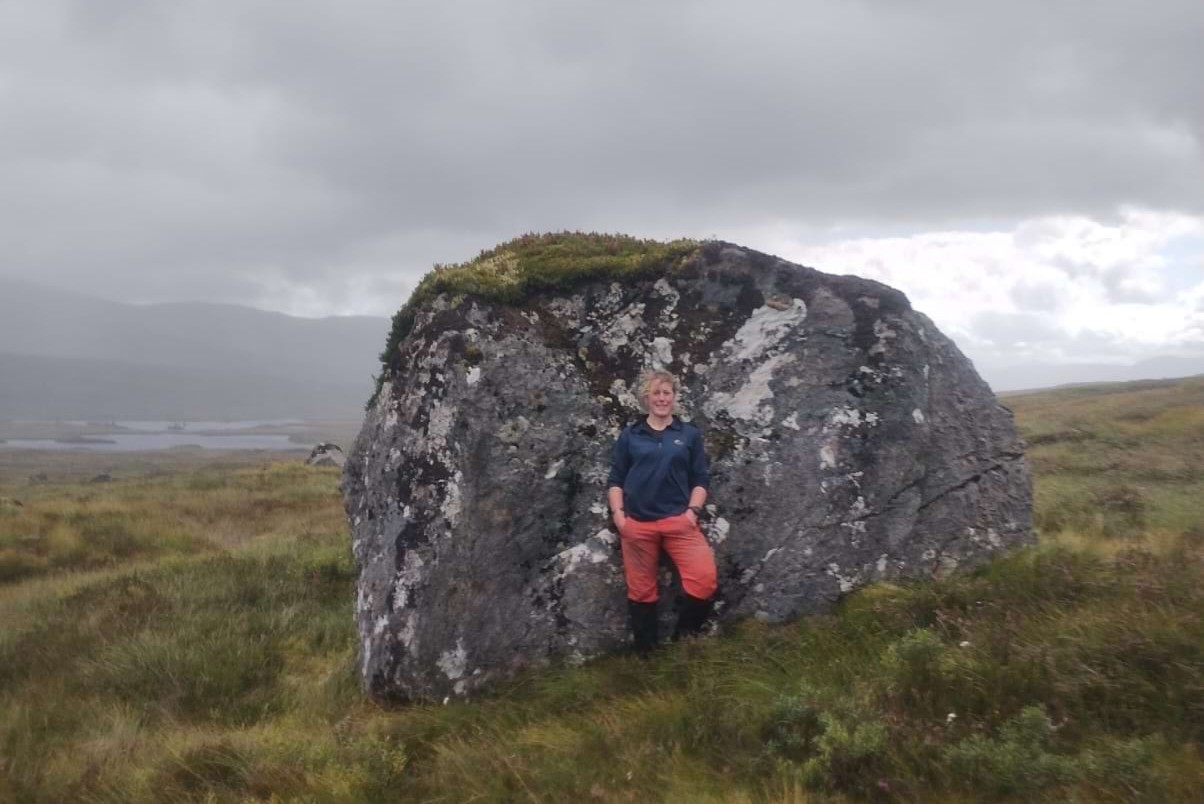
What is your current role, and what does a typical day look like?
I’m an independent forest and woodland management consultant, so every day is varied. I work with clients (owners and land managers) from different backgrounds, in very diverse landscapes and woodlands across the West of Scotland.
My role is to advise and put practical plans in place to achieve the owners' many, and sometimes surprising, aims and dreams for their land. My business aim is to support woodland regeneration in any and every form it takes.
How did you first get into forestry?
My primary school in Highland Perthshire followed a local programme called Growing Up with Trees, where we collected seeds, planted them, and tended the seedlings before planting out the young trees in P7 - and then helping the P1s collect their first seeds!
It has always been my preferred career choice from age 10 onwards, and I’ve now been working in the sector for 20+ years.
I feel I have been very fortunate in being able to follow a career path in forestry, as it is very rewarding in so many ways - few people must feel the pleasure we foresters have of seeing a new forest of young trees finally get established and grow on into the future of others.
What advice would you give to women considering forestry?
This is a fantastic career choice for anyone, from any background or educational starting point. There are so many different roles and niches suiting a broad range of skills, interests, and working patterns.
A steely passion to make things happen is important...forestry projects can be slow to develop from initial plan to fruition, so a committed and long-term ambition is required.
Why do you think woodland creation is important right now?
Woodland creation has always been important to Scotland and the UK as a whole. A wooded landscape operating at its full potential can fulfil the demands of rural economies, our communities, and our wildlife, as well as mitigate the impacts of climate change however these challenges may develop in future.
Many people still don't realise that most of Scotland's woodlands and forests are managed at all, believing they just spring forth without any assistance!
I'm excited every time I see a new seedling spring up! The potential for large-scale woodland regeneration and expansion is huge - the forests of the future will be immense, vital, and prosperous! It's all very exciting.
Dr Kate Palmer, Technical and Industry Support Manager, Confor
Confor supports sustainable forestry and wood-using businesses across the UK through policy engagement, market development and member support.
Based in the Cairngorms, Kate works on technical forestry issues, policy and industry best practice, alongside developing and managing projects that support the economic development of the sector.
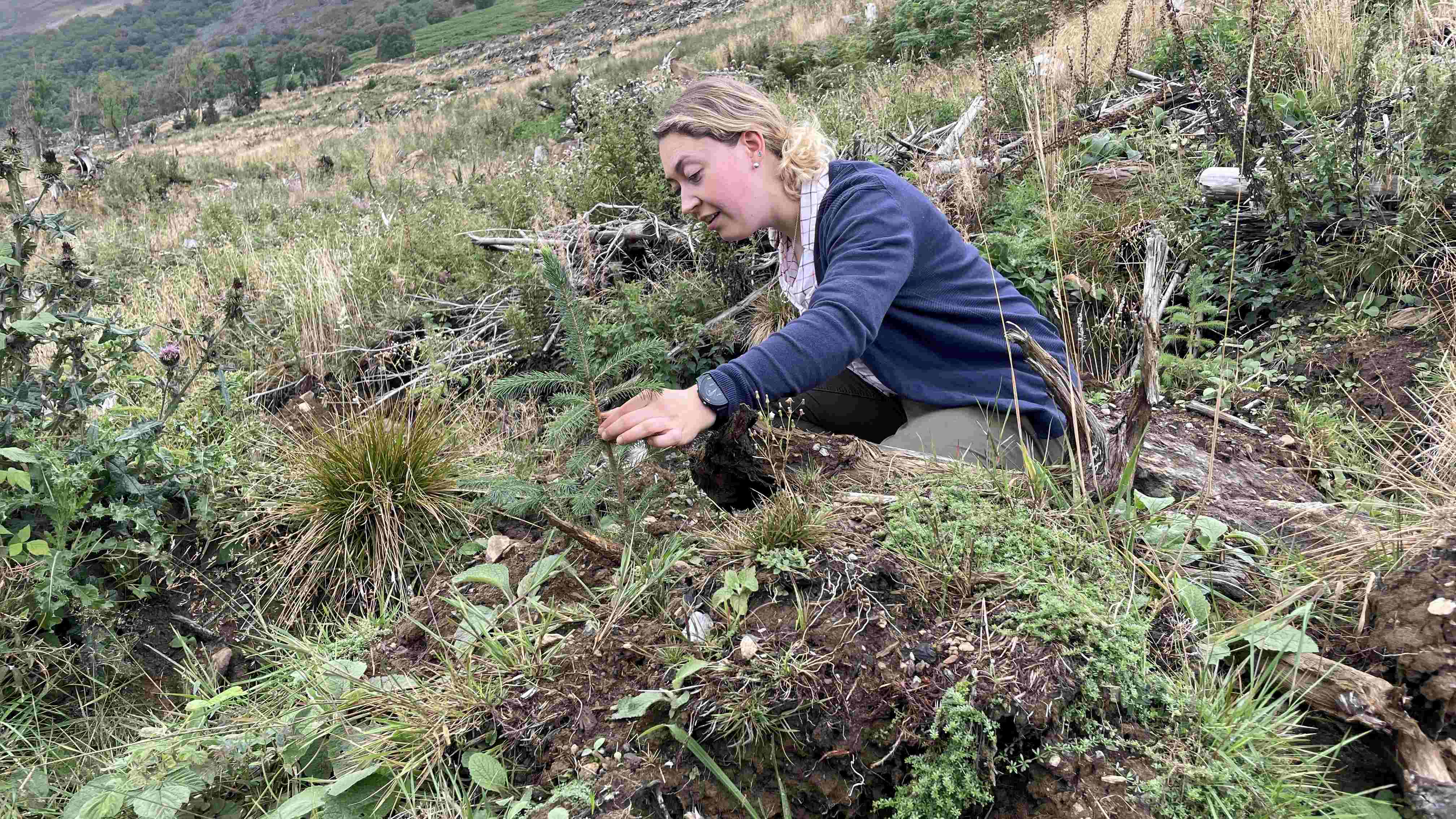
What is your current role, and what does a typical day look like?
I’m the Technical and Industry Support Manager at the Confederation of Forest Industries (Confor). My role focuses on supporting members and the wider sector on technical forestry issues, policy, and best practice.
A typical day is varied and can include engaging with members to provide advice, contributing to policy development and consultations, liaising with government and research bodies, and helping to interpret and communicate technical guidance. I also spend time coordinating projects, responding to emerging issues in the sector, and ensuring industry perspectives are effectively represented.
How did you first get into forestry?
I came into forestry as a career changer, having previously worked in transport innovation. I was motivated to move into the sector because I wanted to engage more directly with the rural economy and work more closely with land-based industries.
I brought transferable skills from my previous role, particularly around stakeholder engagement, policy, and innovation, which translated well into forestry. I also spent time on forest management shadowing days, which brought the work to life and made me realise how complex and interesting the sector is - this resulted in my first forest management role.
What do you enjoy most about working in the sector?
Forestry is a sector where you can see the tangible outcomes of good management over time, while also contributing to bigger issues like climate, biodiversity, and the rural economy. What I enjoy most about my role is the combination of practical, on-the-ground impact and strategic influence.
It might surprise people how much of the role involves working across different parts of the sector, from industry and practitioners through to government and research. A big part of the job is translating between those groups and making sure technical issues are clearly understood.
I also really value the people. It’s a collaborative sector with a strong sense of shared purpose, and I enjoy working with practitioners, policymakers, and researchers to solve complex challenges. The variety is another big draw; no two days are the same, and there’s always something new to learn.
Have you seen positive changes in opportunities or representation?
There have definitely been positive changes. There’s a growing focus on broadening access to the sector and attracting people from a wider range of backgrounds, which is starting to come through in both opportunities and representation.
There’s still more to do, but there’s a much stronger awareness now of the need to make the sector more inclusive and accessible, and that’s being reflected in how organisations approach recruitment, training, and engagement.
What advice would you give to women considering forestry?
I’d encourage anyone considering forestry to spend time in the sector if they can, whether through shadowing, placements, or simply speaking to people in different roles. It’s a broad sector with a wide range of opportunities, and getting a feel for that is really valuable.
It’s also worth remembering that there isn’t a single route in. People come into forestry from a range of backgrounds, and there are plenty of relevant transferable skills.
Strong communication and stakeholder engagement skills are really important, as forestry often involves working with different people, from landowners and contractors through to government and environmental organisations.
Being adaptable and willing to learn is also key, as it’s a complex sector with constantly evolving legislation and best practice guidance.
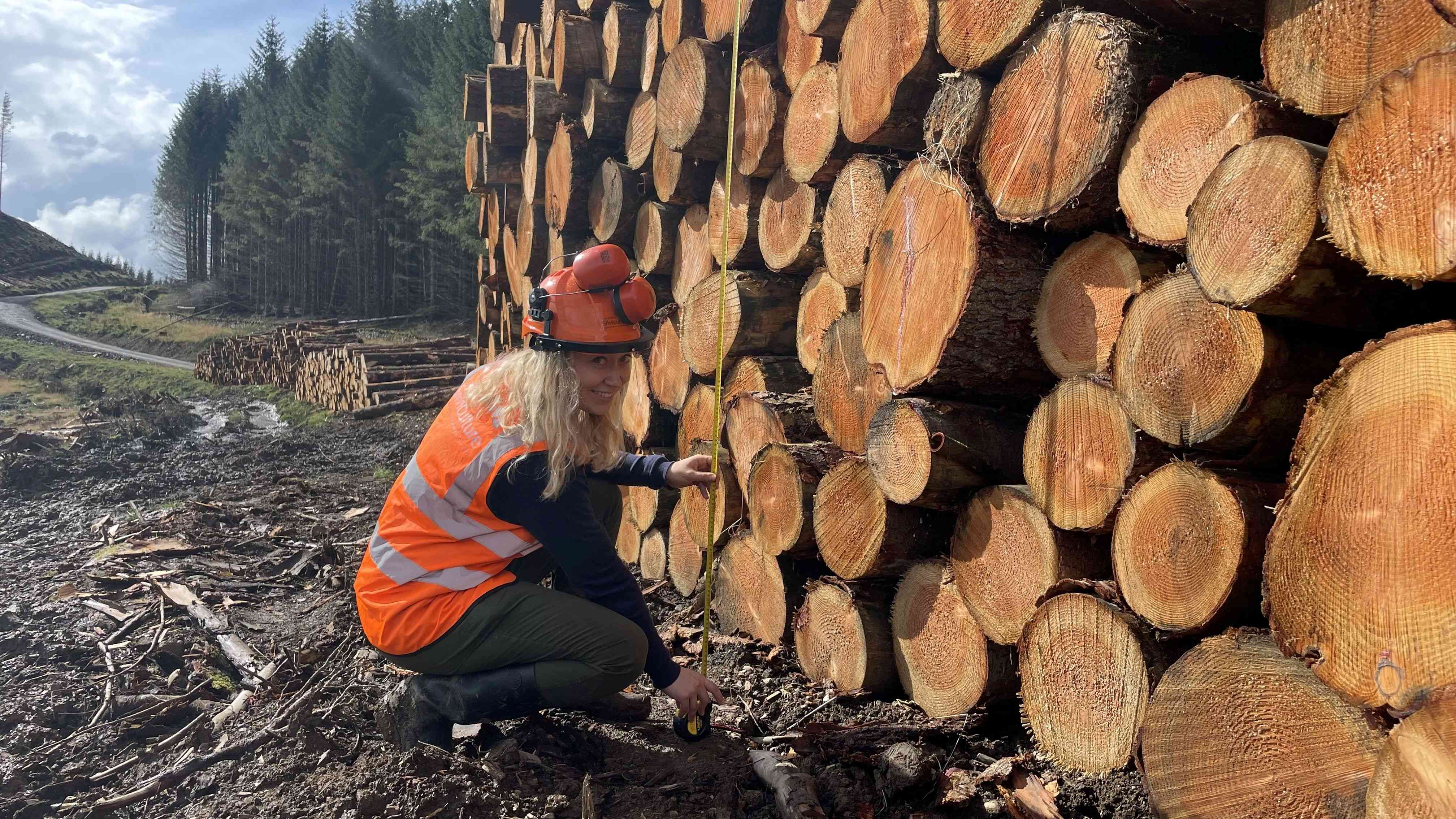
Why do you think woodland creation is important right now?
Woodland creation is important because it sits at the intersection of a number of current challenges: climate change, biodiversity loss, and the need for a sustainable domestic timber supply. It can deliver multiple benefits, from carbon sequestration and habitat creation through to supporting the rural economy.
There’s scope to take a more integrated, long-term approach to land use, and woodland creation is a key part of that.
What excites you most about the future of forestry?
What excites me is the growing recognition of the role forestry can play in addressing some of the big challenges we’re facing. There’s a real opportunity around timber production, particularly in using more homegrown timber to build homes and reduce reliance on imports.
It feels like forestry is becoming a much more central part of the conversation around sustainable land use and construction.
A misconception is that forestry is quite traditional or old-fashioned. In reality, it’s a sector that’s evolving quickly, with a strong focus on innovation, data, and responding to challenges like climate change and biodiversity.
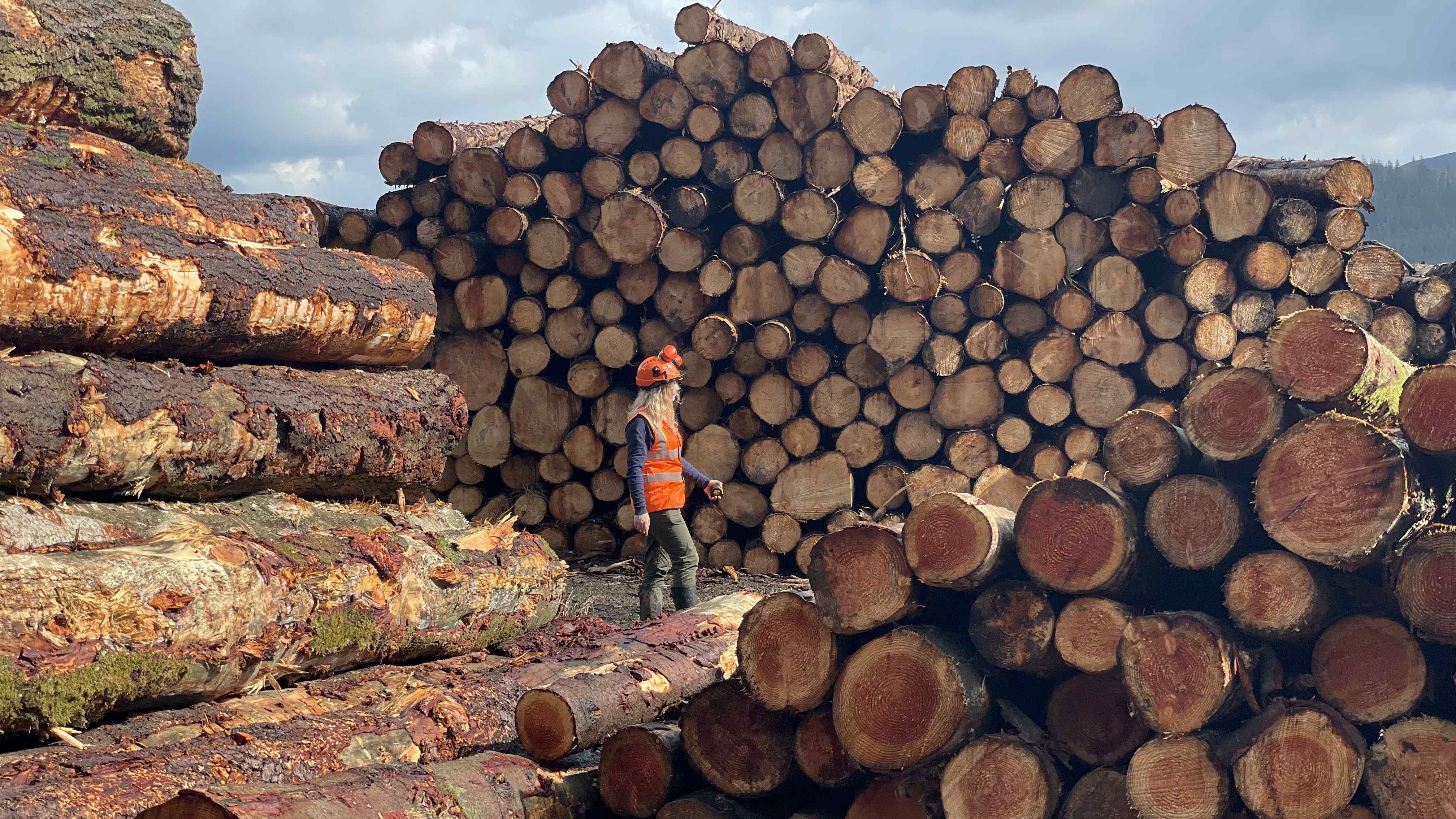
Looking ahead
Hester, Kate, and Dr Kate’s experience highlights the variety of pathways into forestry, as well as the range of skills involved across different roles.
From woodland creation on the ground to wider innovation, diversity of experience will continue to strengthen how the sector develops. As this blog reflects, women are playing an important and growing role across forestry and woodland carbon.
While each journey is different, a common theme runs through these perspectives - forestry is shaped by people, place, and long-term thinking.
This is also reflected within Forest Carbon, where women across the team, past and present, contribute to project delivery and the day-to-day running of the business.
If you’re interested in learning more about woodland carbon projects, the Forest Carbon team would be happy to help. Get in touch!
2. The Future of Jobs Report 2025, (2025) World Economic Forum
3. Annual Equality Monitoring Report: 1 April 2024 to 31 March 2025, (2025) Forestry Commission
/public/69c/ba7/903/69cba7903f1f2180645738.jpg)
/public/699/f1d/561/699f1d56181c9082011864.jpg)
/public/697/b68/4f8/697b684f89c4f754947742.png)
